In the past few months I have come to realize that I spend more time thinking about food than the average human. Throughout each week, I spend a large chunk of time watching recipe videos on Buzzfeed‘s Tasty app, scrolling through posts by food bloggers on Instagram, and saving delectable-looking recipes on Pinterest. After buying groceries for the week each Sunday, I subsequently spend any spare moment I have planning for the next grocery run that will inevitably happen the following Sunday. I have been trying to be more present recently, so I have been doing my best to savor and enjoy everything I prepped that week while stifling the excitement in the back of my mind about the recipe I found for the following week.
In addition to my realization about my food-related thoughts, I have also had the desire to gorge myself on “normal people food” (can you tell I’ve been very introspective recently?). Maybe it’s leftover unhealthy eating habits from the holidays catching up to me or maybe it’s my body’s way of rebelling as I attempt to get back on my normal routine. Whatever it is, on one particular day a few weeks ago, I really just needed something that was deliciously cheesy and gooey. Thus, this lasagna recipe was born. After some thought, I decided that I wanted to make this recipe vegan. I ended up deciding this for a couple of reasons:
1) I have a strange need for every meal I eat to include vegetables or some kind of nutrient-dense element. It’s almost as if my mom’s voice is echoing in the back of my mind saying “eat your vegetables!” I needed to make this recipe healthier than the regular lasagna recipes I had seen online.
2) I have been making an effort to intentionally choose plant-based options when possible.
Now to clarify when possible, I need to step up onto my soapbox for a moment to share something that’s been on my mind.
Everyone knows about the threat of climate change. Most people know general information about the impact the meat industry plays in it. I’ve seen ads or posts on various websites that attempt to make people feel guilty for eating meat. I’ve watched a couple of those scary documentaries that include information about what meat does to your body, secret footage of big farming companies’ inhumane practices, and first-hand accounts of the life-changing magic of going vegan. In fact, the documentary What the Health drove me to commit to a vegan diet for 6 months in 2017. I had been having some major stomach issues even with my gluten and dairy-free diet. I figured that maybe animal products were the culprit. On top of that, I was disgusted by the images I saw depicting the way many animals were being treated in the United States.
After 6 months on a vegan diet, I did not feel any better. In fact, I felt worse; I was bloated, I had no energy, my hair was thinning, and my bowel movements were never regular. Finally, I chose to reintroduce meat and re-evaluate my diet. This is when I ended up cutting out potatoes, and that did the trick! Now, a few years later, I have cut out beans, lentils, and legumes.
Yet again, that pesky vegan question is gnawing at me. The guilt is threatening to influence my choice in what I should do. Should I go vegan again? For the planet? For the animals? For health? This time though, I’ve finally decided that my answer is no.
I am definitely not knocking the vegan diet—in fact, I envy the people who can make it work for them. However, I have accepted that I am not one of those people for a couple reasons. First, some major sources of vegan protein are beans, lentils, and legumes; those sources will not work for my stomach (I’m telling you—even after eating a side of beans at a Mexican restaurant, I am bloated, gassy, and uncomfortable for multiple days). Sure, there are also specific protein-rich grains I can eat, but I generally stay away from brown rice because my body doesn’t break it down and there is only so much quinoa one can take. I eat tons of seeds, nuts, and nut butters, but they are all very expensive. It is the protein sources that bring me down in the long-run—the protein sources that I know are available, but don’t work for me.
My point is this:
Being vegan is not sustainable or healthy for me and that is okay.
It is not sustainable for my body or my wallet. Being vegan does not make me feel good and would cost me more money than I currently have to spend on food. And that is okay.
I can’t control what is good and bad for my body—if I could, I would not have this blog. I’d be sitting in bed eating a loaf of sourdough bread with butter while chugging a huge glass of chocolate milk!
On the other hand, I can control the food I do choose to buy. I can buy my eggs exclusively from friends and farmer’s markets. I can buy organic chicken from smaller farms and on special occasions, I can buy sustainable fish. I can avoid pork and beef completely. I can evem forego animal products completely occasionally by eating oatmeal with a huge glob of nut butter and chia/hemp seeds for breakfast, lunch, or dinner (I love oatmeal, y’all). There are many things I can control that will make a difference—even if it’s tiny.
I read this cheesy (non-dairy, of course) quote on Instagram a while back and it really stuck with me:
“Be imperfectly vegan. Be imperfectly zero waste. Be imperfectly plastic free. Be imperfectly sustainable. Because small conscious changes are better than none at all.”
Amber Allen
@thefairlylocalvegan
So here’s my final thought: I encourage you to think about the small conscious changes that you can make each day. What can you control?
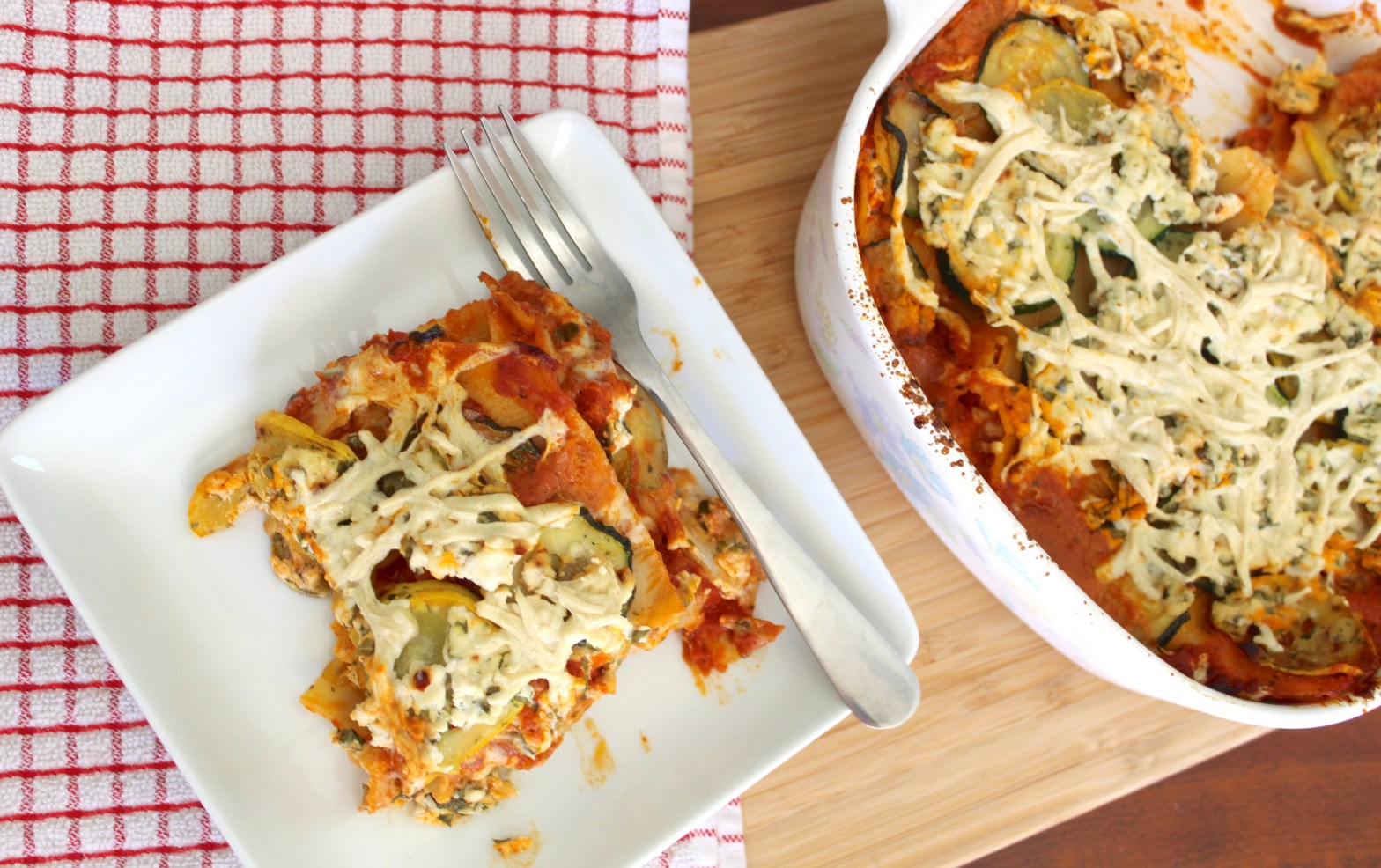
Okay, I’m stepping off of my soapbox now. Whether you’re already vegan or are looking for some ideas for “Meatless Mondays,” I hope this lasagna recipe satisfies your need for some gooey veggie-packed pasta!
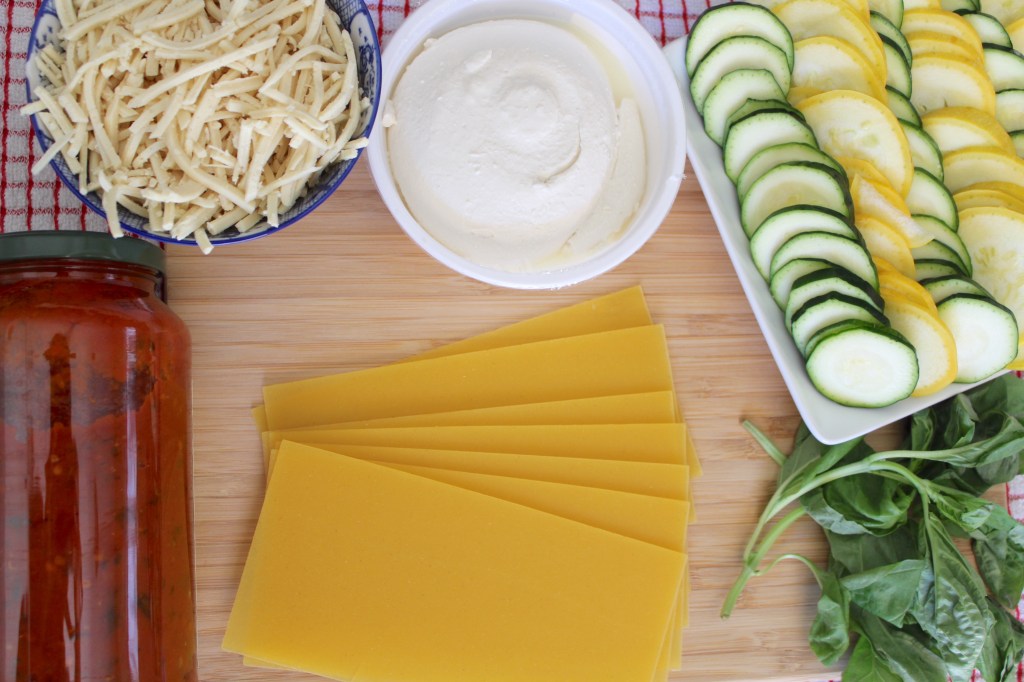
Gluten Free Vegan Lasagna

Servings: 6
Time: 1 hour+
1/4 teaspoon Salt (plus more for the pasta water)
1 Zucchini
1 Yellow Squash
3-4 tablespoons (divided) Extra Virgin Olive Oil
9 sheets Gluten-Free Lasagna (I used Barilla brand)
1/2 teaspoon Dried Parsley
1/2 teaspoon Oregano
1/4 teaspoon Crushed Red Pepper
1 package (8 ounces) Dairy-Free Ricotta (I used Kite Hill brand)
1/4 teaspoon Garlic Powder
1 cup Fresh Basil
1 jar (24 ounces) Pasta Sauce (I recommend a sauce with imported Italian tomatoes—They’re just different!)
1 cup Dairy-Free Mozzarella (I used Daiya brand)
*You can add in more veggies like spinach, mushrooms, bell pepper, onions, or carrots—make it your own!
*To add meat, just add a pound of cooked Italian sausage, ground beef, or ground turkey seasoned with dried parsley, oregano, and crushed red pepper in between your pasta layers!
- Place a medium-sized pot filled with water on the stove over high heat. Add salt until the water is “as salty as the sea.”
- While waiting for the water to boil, slice the zucchini and yellow squash into rounds. Try to get slices as thin as possible!
- Place a large frying pan on the stove over low-medium heat. Once heated, add about 1 tablespoon of the olive oil to the pan. Slide the zucchini and yellow squash in, using a spatula to stir and flip, making sure the pieces are coated in the oil.
- At this point, the water should be boiling in the pasta pot. Add the pieces of lasagna into the pot one by one and turn down the heat to a medium setting. Use a fork to stir occasionally to ensure the pieces are not sticking together. Set a timer to 5 minutes.
- Now it’s time to go back to the squash pan. Sprinkle in the parsley, oregano, and crushed red pepper. Flip and stir until the spices are evenly distributed. Once the squash is soft, remove the pan from the heat. (It’s okay if the squash is not fully cooked. It will finish in the oven!)
- After the time is up for the lasagna, evaluate it. If the pieces are floppy, but still not fully cooked, strain the water out and set aside. If the pasta does not bend easily, let the pasta boil for one more minute or until bendy.
- Time to prep the rest of the filling! Dump the ricotta into a small bowl. Add the salt and garlic powder, then mix.
- Roughly chop the basil into ribbons and add to the ricotta mixture, ensuring everything is incorporated.
- Preheat the oven to 450 degrees.
- In a 9×9 inch square dish, pour in 2-3 tablespoons of olive oil. It is very important to coat the entire surface of the dish and even have a thin pool of olive oil at the bottom the prevent sticking. (The first time I made this, I had to scrape stuck lasagna noodles off the bottom!)
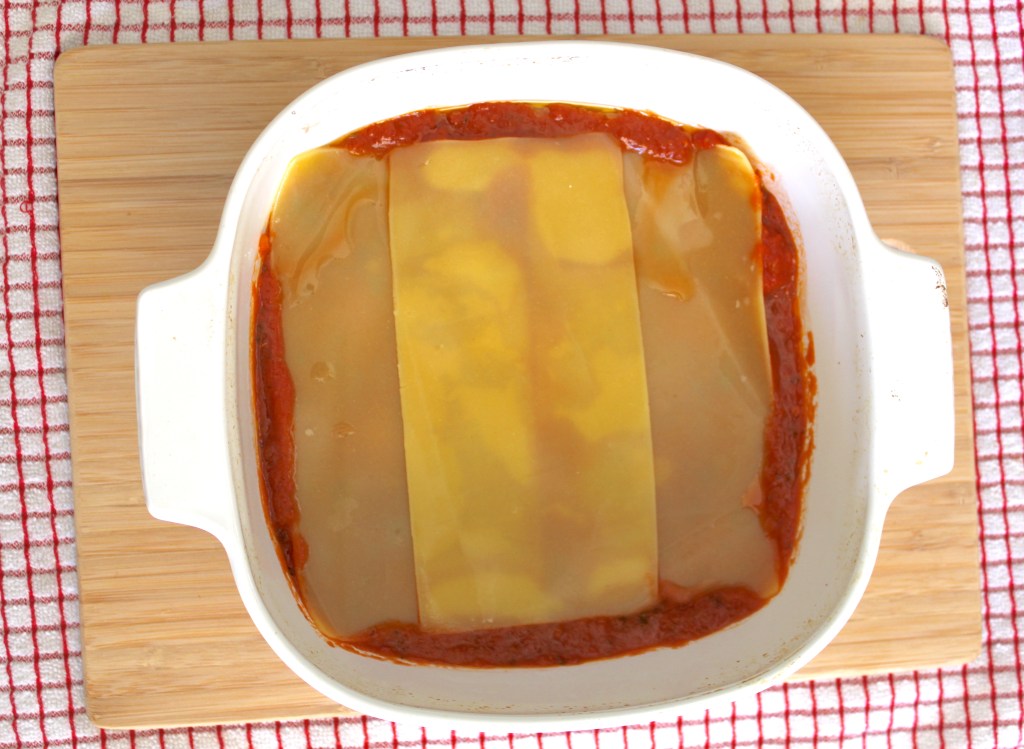
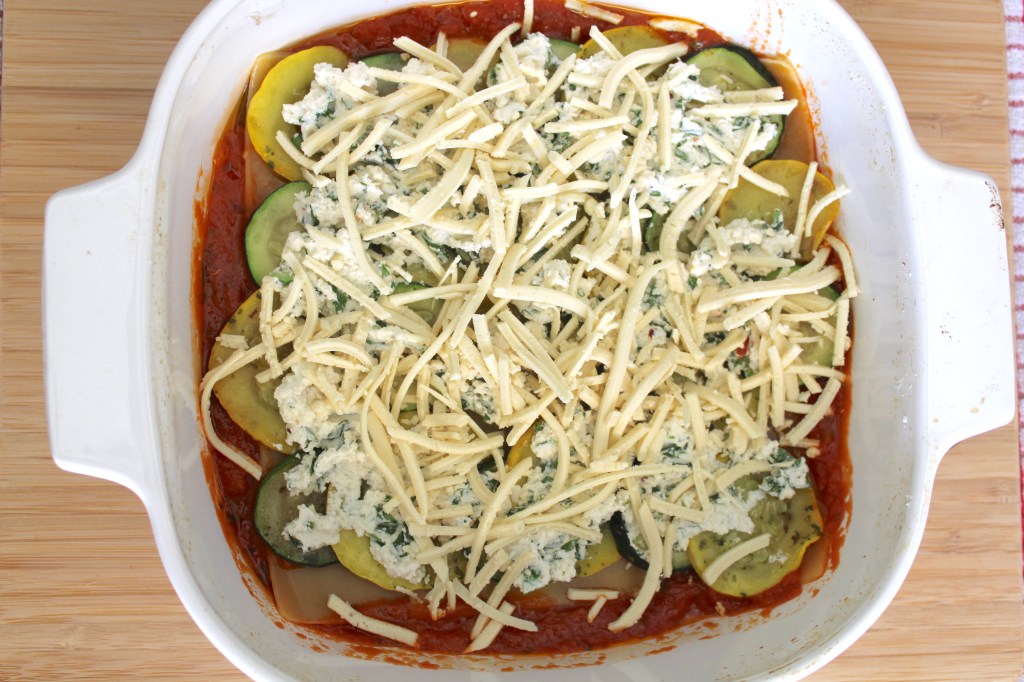
- Now it’s time to layer, layer, layer! Start with roughly 1/3 of the pasta sauce jar. Make sure the bottom of the dish is covered with the layer of sauce.
Next, place 3 sheets of pasta—it’s okay if they overlap a bit.
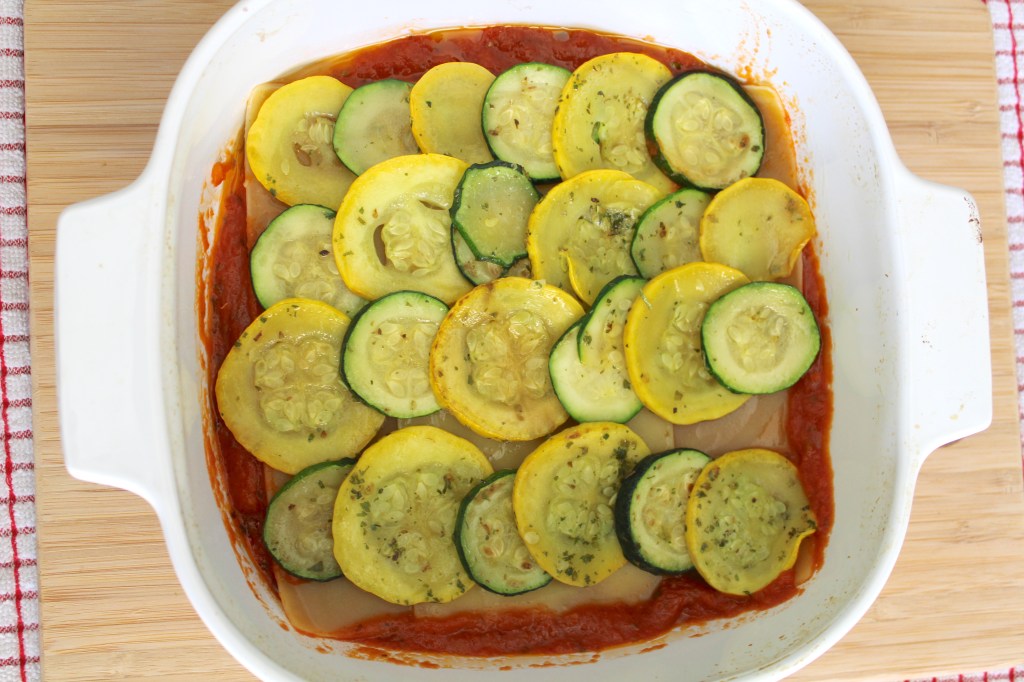
After, completely cover the pasta with a layer of cooked squash.
Finally, add the ricotta mixture and about 1/3 cup of the mozzarella. Don’t worry about clumps and bumps. It will all come together in the oven. - Continue to layer in the same order until all the ingredients are gone!
- Cover the dish with aluminum foil and place in the oven for 30 minutes—no peeking!
- After the time has elapsed, remove the foil and place in the oven for an additional 10 minutes.
- At this point, I like to use a fork to test the pasta. If the pasta can be pierced and tears easily, it’s ready! If it’s still very al dente and does not come out easily, place back into the oven for 5 to 10 more minutes.
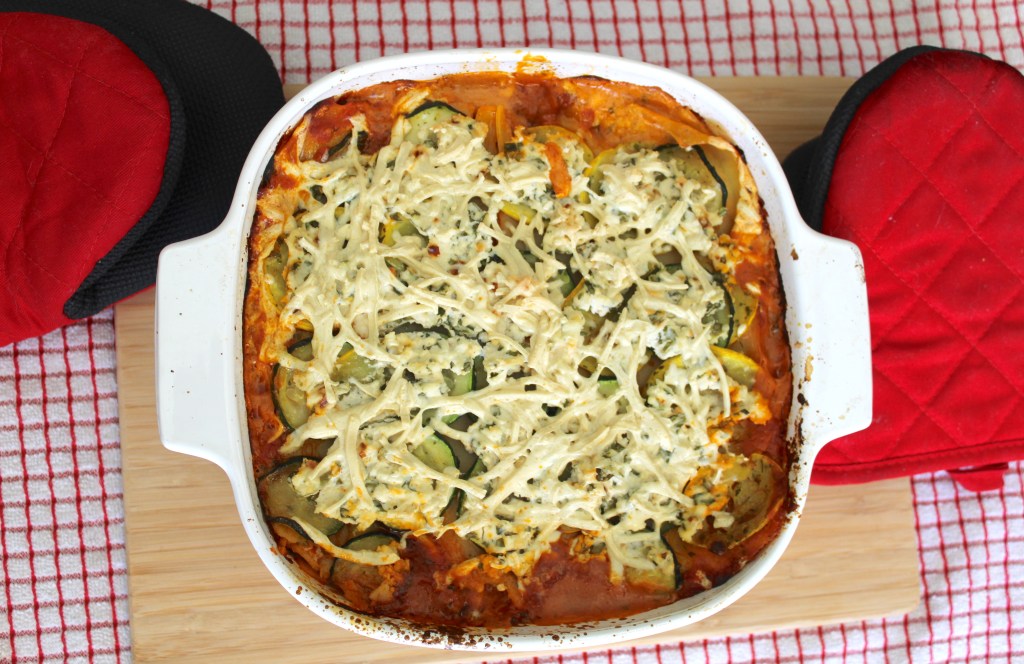
- When the lasagna is done cooking, place the dish off to the side to cool for 10 to 15 minutes. After the agonizing wait is over, enjoy!
 Unrestricted